Explore MAD Arts
Get Tickets
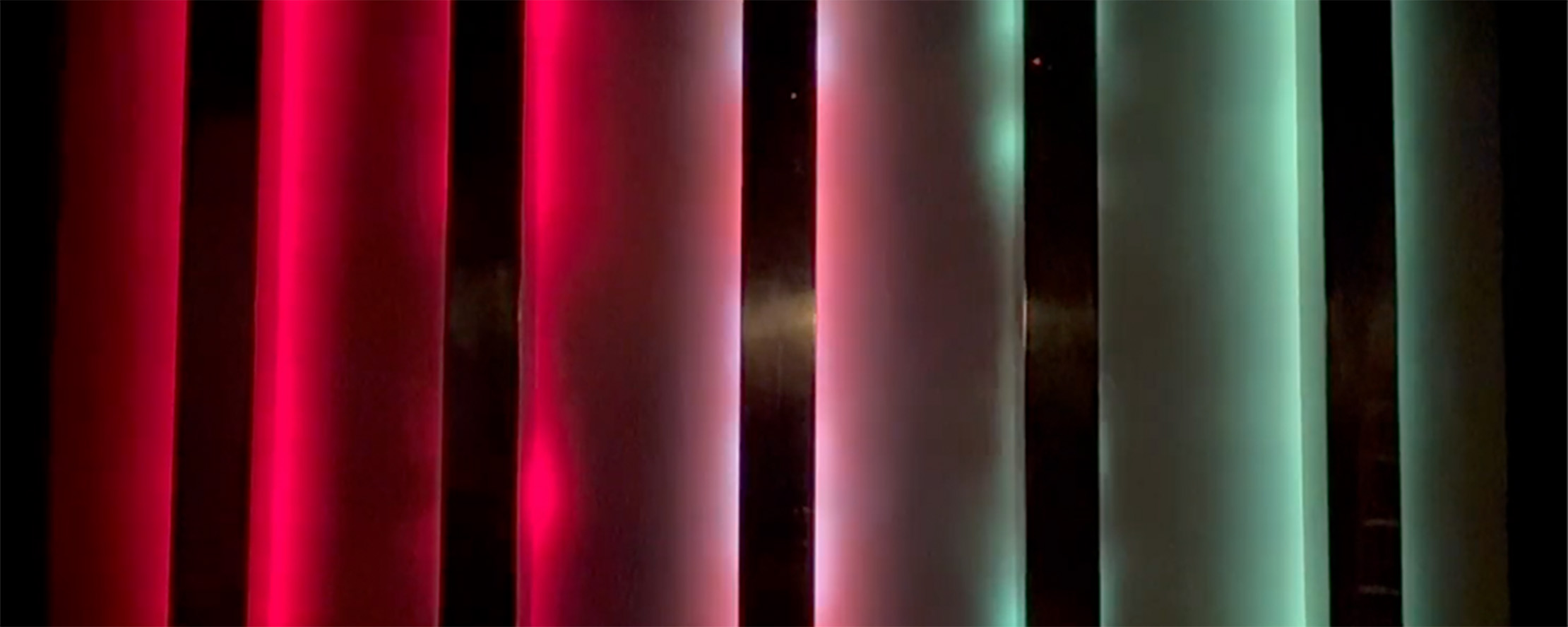
Kinetic art of the 1950s and 1960s stands among the most significant predecessors to contemporary explorations of movement, light, perception, and systems-based art.
This original collection contains artworks by some of the kinetic art movement’s most influential figures. Their pioneering experiments were revolutionary because they created a new concept of dimension of time and space that destabilized formal structures through motion, light, and sound. The viewers’ participation is on a deeply psychological level; installations range from neon lights and mysterious glowing columns placed in darkened rooms to moving sculptures made of translucent materials that absorb ambient light or radiate their own shadows and glow. Featured works include:
These kinetics reveal the remarkable diversity of technologies that artists employed to create constantly changing visual experiences that respond to surrounding environments.
This Kinetic Art collection was originally assembled by notable collector Patrick Lannan Sr., who bought a selection of pieces in the 1960s, many directly from the famous Howard Wise Gallery in New York. In 1999, this collection was transferred to Robert and Mary Montgomery along with the Lake Worth Contemporary Art Museum. The Montgomerys subsequently donated the entirety to the Kinetic Art Organization (KAO) in 2005, ensuring its preservation and future study. Now part of MAD Arts' permanent collection, this collection was donated by KAO Kinetic Art Organization.
Today, as artists increasingly work with artificial intelligence, robotics, immersive environments, and digital networks, these kinetic pioneers appear more relevant than ever. This exhibition invites viewers to rediscover a critical chapter in the history of art and technology—one that continues to shape contemporary artistic practice and our understanding of how art can activate space, light, movement, and perception.
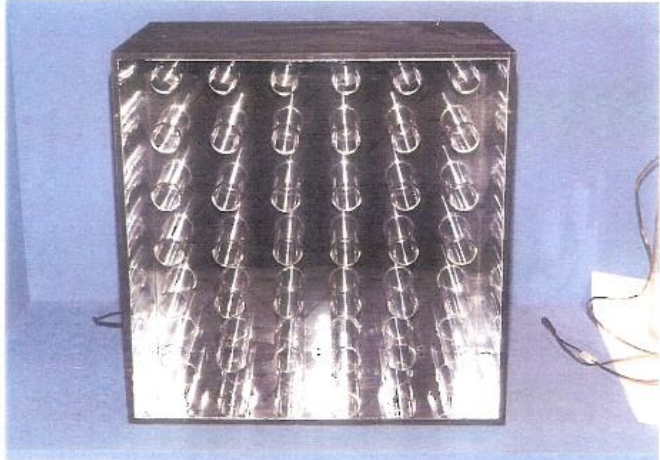
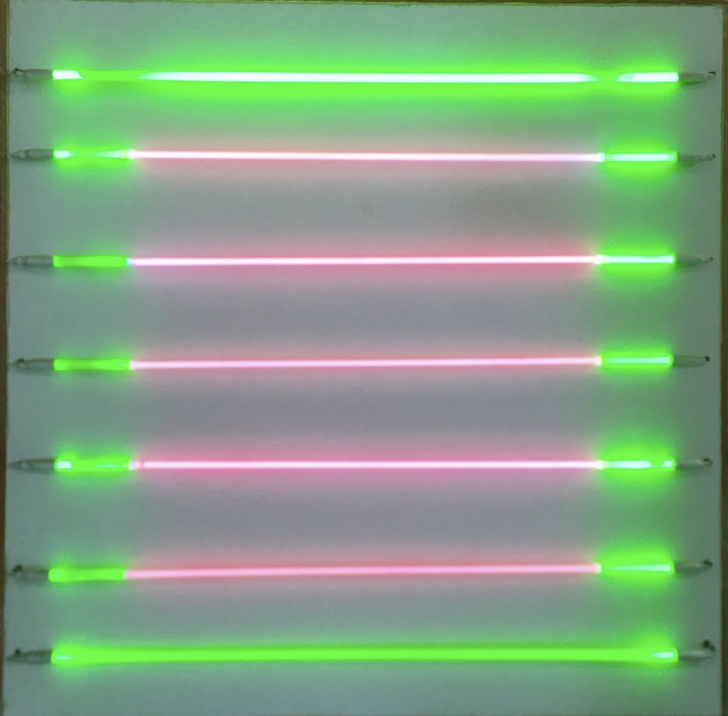
Howard Jones was born in New York in 1922. Although trained as a painter, in the 1950's, Jones became interested in working with technology. By the early 1960’s, he made light and sound his primary mediums, using them to explore concepts of time and space. During the next several years, Jones became an important artist in his field and had several one-man exhibits around the country. Jones’s work is a direct product of this experimental environment. His efforts to pursue the relationship between human experience and man-made materials and tools were largely motivated by the conviction that, in an electronic age, artists must actively apply the products of technology in order to address philosophical and moral questions raised by its rapid development.
John Healey started his path in art back in the 70's on Elmwood Ave in Buffalo, NY. Originally called Elmwood Gallery, his studio showed the works of emerging artists such as Howard Werner and established artists such as Imogene Cunningham. John worked as a professional photographer, dabbling in everything from fine art photography, investigative photography, weddings, nudes, fashion and celebrity photography. In the 80's, John became more involved in glass and started his path towards glass sculpture. Initially, John worked in stained glass and beveled glass before transitioning fully into three-dimensional sculptural works.
Gregorio Vardanega, a kinetic artist of Italian origin, focused on the direction of light, in relation to color, movement, and space, adding electronics in his artistic work. He used electric and transparent colors, spaces, diffraction, and light transmission in solid liquids and gases. Through the 1950s, he experimented with kinetic art, moving and rotating at irregular intervals, which produced abstract patterns through lighting, reflections, and shadows. He made his first luminous sculpture as a result of trying to embody the physical and psychic universe mind.
Martha Boto played a key role in the evolution of kinetic light. Focusing her work around the concepts of movement, illumination, and color, Boto explored the potential of materials that could modify, absorb, and reflect light. Kinetic Artists Gregorio Vardanega and Martha Boto created the term "chromocinetism" to describe their artistic research.
Louis Cork Marcheschi, an Italian-American sculptor and musician, saw the light early on, pursuing it in its many permutations, perfecting his artistry. Upon discovering the work of Nikola Tesla in 1968, he realized his sole interest in energy as a medium and decided to abandon sculptural objects. Marcheschi achieved this through experimentation with Tesla's work on radio frequency and the transmission of electrical energy without wires.


By donating to MAD Arts, you're not just supporting our mission; you're investing in the future of art and technology, fostering a cultural legacy, and uplifting the South Florida community. Help us continue to provide a space where creativity thrives and new ideas come to life.
Donate Today


