Explore MAD Arts
Get Tickets
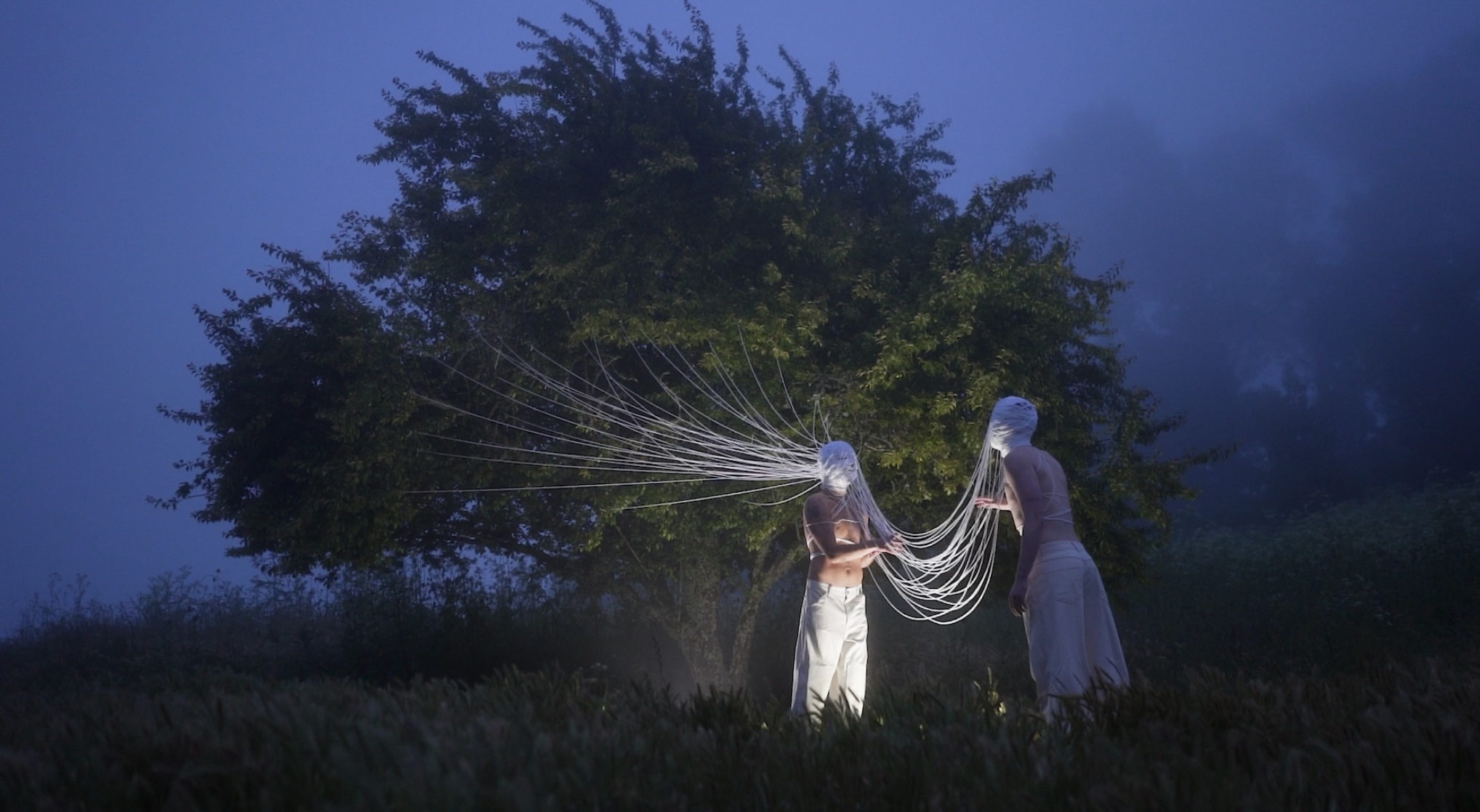
Bodies, Memory, Ritual brings together four video works that explore the body as a site of identity, memory, culture, and transformation.
Across the exhibition, performance becomes a language through which artists investigate how experience is held and expressed through the body. Movement, gesture, repetition, costume, and ritualized actions become ways of inhabiting different histories, identities, and states of being. The body can appear as a performer or an archive through which personal and collective experiences are made visible.
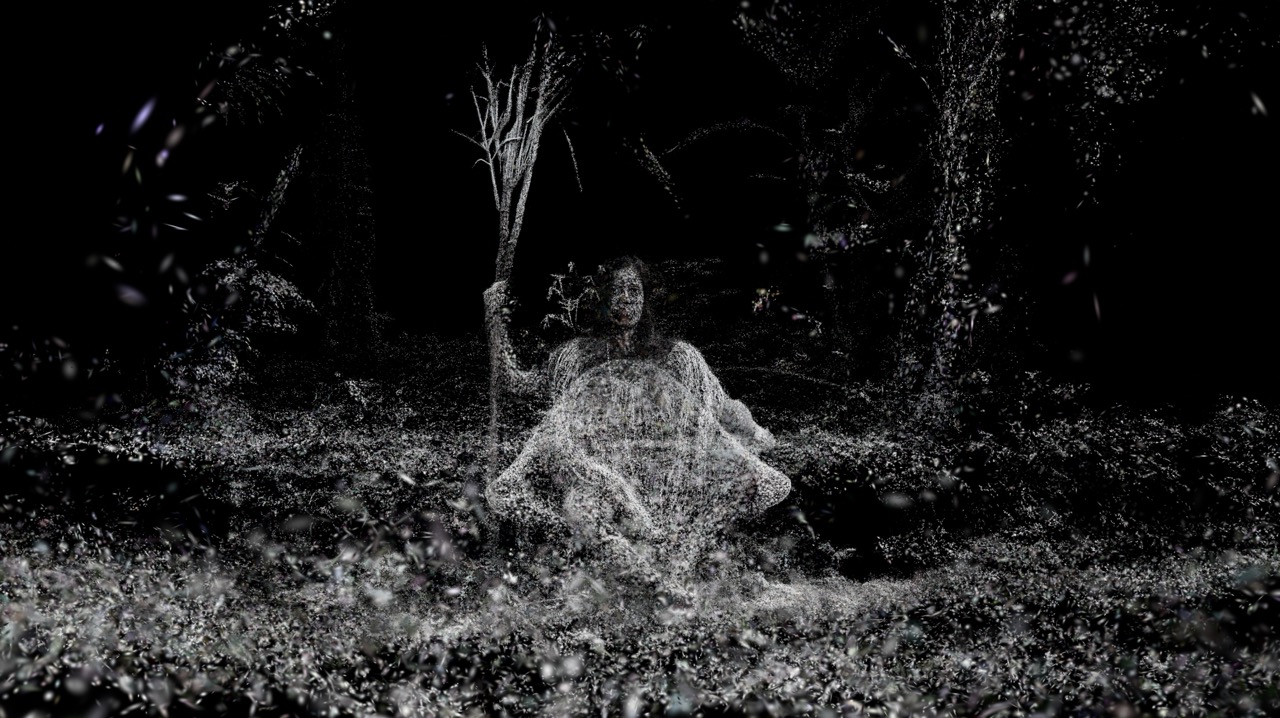
The works also consider how contemporary technologies can extend these embodied practices. AI, 3D scanning, and digital imaging introduce new ways of recording, directing, or transforming bodily presence. In other works, transformation happens through physical performance, symbolic imagery, and the body itself.
Bringing together different cultural and personal perspectives, the exhibition moves between inherited practices and contemporary forms, asking how bodies carry what has been passed down, what has been disrupted, and what is still becoming.
Together, the works propose the body not as something fixed, but as a place of continual negotiation between memory and presence, tradition and change, human experience and technological possibility.
Bodies, Memory, Ritual was curated by Tere Garcia, Founder of Performance in Flux.
My Mother and (A)I by Kawita Vatanajyankur
As Kawita Vatanajyankur’s mother cradles her daughter, her body becomes a living paintbrush. Each stroke of ash is both a meditation and a form of work: an embodied act of repetition, care, and discipline that echoes the daily gestures of maternal guidance. Through the use of electric muscle stimulation, electrodes attached to Kawita’s muscles guide the movements of her arms through an AI system trained with written memories of her late father. His invisible presence is reawakened within the performance as an echo carried through data, rhythm, and remembrance. The performance becomes a reunited gesture of intergenerational connection, where each ash stroke unfolds as an embracing ballad between lost memory and the ongoing present.
Each River Holds a Memory by Fernando Velázquez and Tiriri Rayo
Based on a myth of the Marikito Tapuyá people from Pernambuco, Brazil, this work places two distinct technologies in dialogue. Historically, many Indigenous peoples have been killed in the context of forced catechization, and they continue to struggle for their rights and territories today. This selection reinforces the importance of understanding Indigenous cosmologies as living systems of knowledge, capable of reorganizing ways of thinking about the body, memory, history, and territory.
We Knew the World in Fragments of Color by Victoria Ruiz
This work reflects on the artist’s experience of being born in Venezuela during political turmoil and leaving her native country for the United States at a young age. Through handcrafted full-body suits, coloured backdrops, and symbolic details drawn from Latin American culture and spirituality, Ruiz stages a dreamlike world where memory is shaped through the eyes of a child suspended between places.
The film traces the scattered fragments of migration, revealing an internal landscape marked by nostalgia, displacement, and the constant negotiation of belonging. Rather than seeking a fixed sense of identity, the work embraces fragmentation as a condition of living between worlds, where colour becomes a language of survival, resilience, and faith.
Repeating Patterns and Always speaking you by Swilk
In Swilk’s performance installations, ethereal figures bound to their environment explore queer identity as an innate part of the human condition. The performers connect to objects of the Earth, emphasizing how the persistence of queerness parallels the permanence of the natural world.
In the face of ongoing political violence, their work asserts that to eliminate queer people would require an undoing of human nature. "We are as inherent as the Earth itself."

Performance in Flux is a South Florida curatorial platform founded by Tere Garcia, dedicated to video and performance art at the intersection of body, movement, and technology. Through screenings, exhibitions, and live programs, it supports experimental artistic practices and builds dialogue between local, national, and international artists and audiences.
Kawita Vatanajyankur has achieved international recognition. In 2015, she was a Finalist for the Jaguar Asia Pacific Tech Art Prize and was included in the Thailand Eye exhibition at the Saatchi Gallery, London. Vatanajyankur has exhibited widely across Australia, Asia, the United States, and Europe. Her works are held in the National Collection of Thailand and in leading museum collections including the Queensland Art Gallery and Gallery of Modern Art (QAGOMA), Singapore Art Museum, JUT Art Museum, M Woods Museum, Dunedin Public Art Gallery, Maiiam Contemporary Art Museum, DIB Contemporary Art Museum, and MOCA Bangkok. In 2026, she will participate in the upcoming NGV Triennial 2026 in Melbourne, Australia, and present a major solo exhibition at the Yuz Museum in May 2026.
Fernando Velázquez (Montevideo, Uruguay, 1970; lives and works in São Paulo) is an artist, curator, and educator. He develops a critical practice on the modes of operation of contemporary technologies, in dialogue with the history of art. He has participated in exhibitions and festivals such as Ars Electronica, Frestas Trienal de Artes, Mundo de Redes (Centre Pompidou), and the Mercosul Biennial. He works with installations, audiovisual performances, and site-specific projects, articulating technology, ecology, and perception.
Tiriri Rayo (Escada, PE, Brazil, 1998, lives and works between Escada and Recife) is a visual artist and photographer, winner of the 12th and 13th Pernambuco Photography Prize (2024). Currently, she has a long-term exhibition at the Museu das Favelas in São Paulo, with the series Favela de Kaboko é Aldeia. In 2023, she performed the opening piece for the exhibition Minha Hora Ancestral at the Memorial Abelardo da Hora. She creates images that weave fictions between technology and ancestry, narrating original worldviews in which human beings and nature merge into a single existence. In audiovisual media, she uses this language as a tool for visibility for the indigenous people of the Mata Sul region of Pernambuco.
Victoria Ruiz is a Venezuelan multidisciplinary artist and Central Saint Martins graduate (2022) working across photography, sculptural garments, and live performance. Rooted in activism and the carnivalesque, her practice explores identity, cultural resistance, and Afro-diasporic spirituality. She is currently a resident at Sarabande: The Lee Alexander McQueen Foundation, where she continues to expand her multidisciplinary practice.
Swilk is a queer fiber installation and performance artist who creates both mechanically automated and environmentally activated sculptural weavings. Based in Oakland, California, their work connects people to the gestures of resilience that emerge from grief, particularly in the context of queer history.
Swilk has presented solo and group exhibitions internationally, including major projects at the Internet Archive (San Francisco), CICA Museum (South Korea), and New York Fashion Week, with work exhibited across the US, Europe, and Asia. Their practice has been recognized through numerous awards and grants, including the ArtPrize2022 Featured Public Project Grant. Their work is held in permanent collections, including the UCSF AIDS Archive and the Internet Archive.


By donating to MAD Arts, you're not just supporting our mission; you're investing in the future of art and technology, fostering a cultural legacy, and uplifting the South Florida community. Help us continue to provide a space where creativity thrives and new ideas come to life.
Donate Today


