


Explore MAD Arts
Get Tickets
MAD Arts
481 S Federal Hwy
Dania Beach, FL 33004
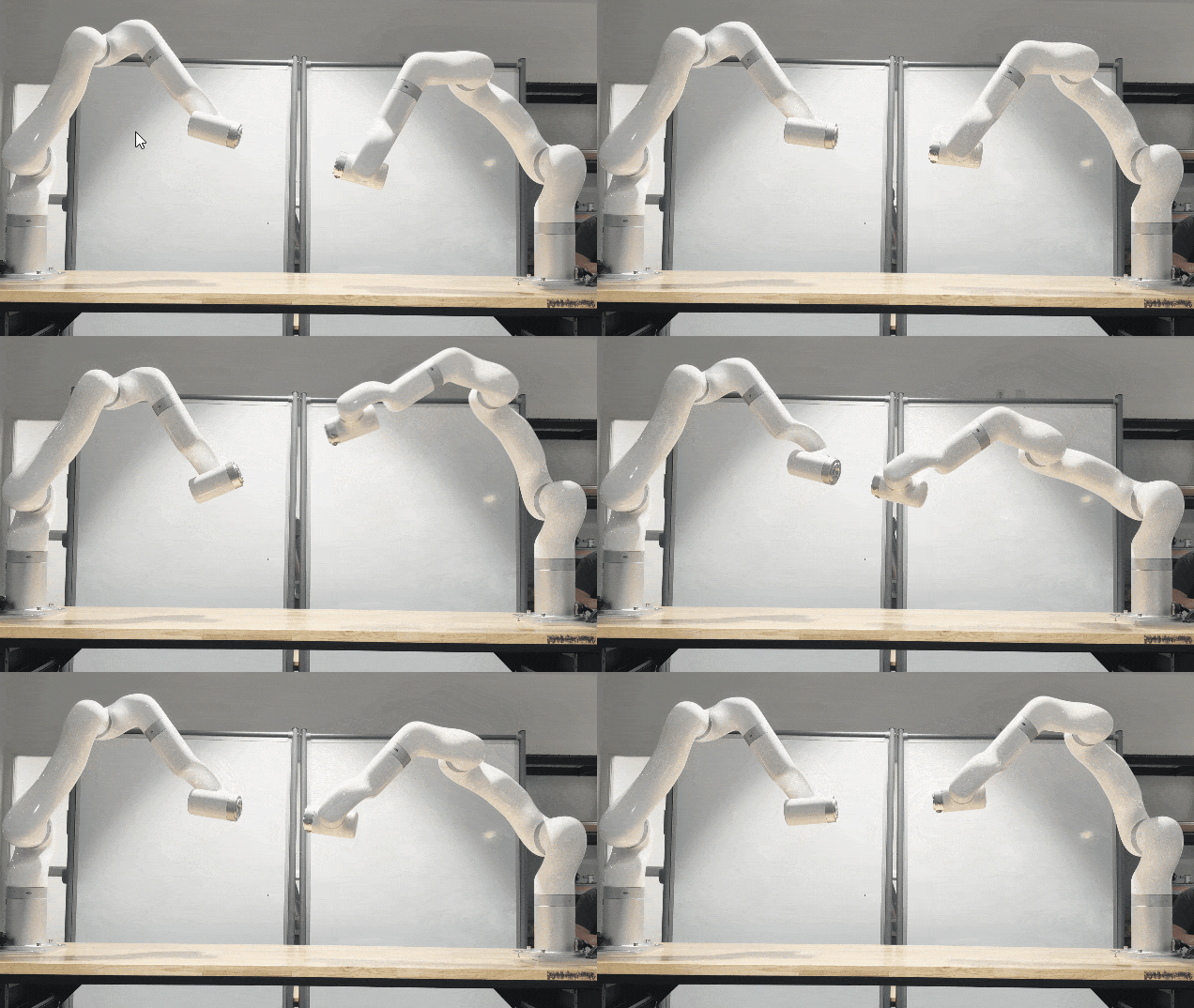
Industrial robots are becoming increasingly accessible as tools for artists, yet programming them often requires specialized engineering knowledge that creates a barrier to creative experimentation. This workshop introduces a different approach: using Blender's animation environment as an intuitive interface for choreographing robotic movement.
Over two days, participants will learn how familiar animation techniques—including keyframes, constraints, and procedural workflows—can be translated into the movement of industrial robotic arms using Animaquina, an open-source Blender add-on developed specifically for creative robotic control.
Rather than focusing on manufacturing or industrial automation, the workshop explores robotics as a medium for artistic expression. Participants will investigate movement, performance, spatial choreography, and physical interaction while developing a deeper understanding of how robotic systems can become collaborators in installation, sculpture, performance, and digital fabrication.
Through demonstrations and hands-on exercises, participants will animate robots, simulate movements, and execute robotic performances in a safe, guided environment. The workshop concludes with participants creating and presenting a short robotic choreography or artistic concept.
Participants will:
Participants create and execute their first robotic animation.
Participants develop an individual or collaborative robotic choreography, installation concept, or performative sequence with guidance from the instructors.
Presentation of projects followed by group discussion and critique.
This workshop is intended for artists, designers, architects, animators, creative technologists, and other creative professionals interested in exploring robotics as a medium for artistic expression.
Participants should have prior experience with digital creative tools—such as 3D modeling, animation, digital fabrication, game engines, creative coding, or computational design—but no previous experience with robotics is required. Familiarity with Blender is beneficial but not essential.
The workshop is best suited for individuals looking to incorporate robotic motion, kinetic systems, or interactive machines into their artistic practice or creative research.
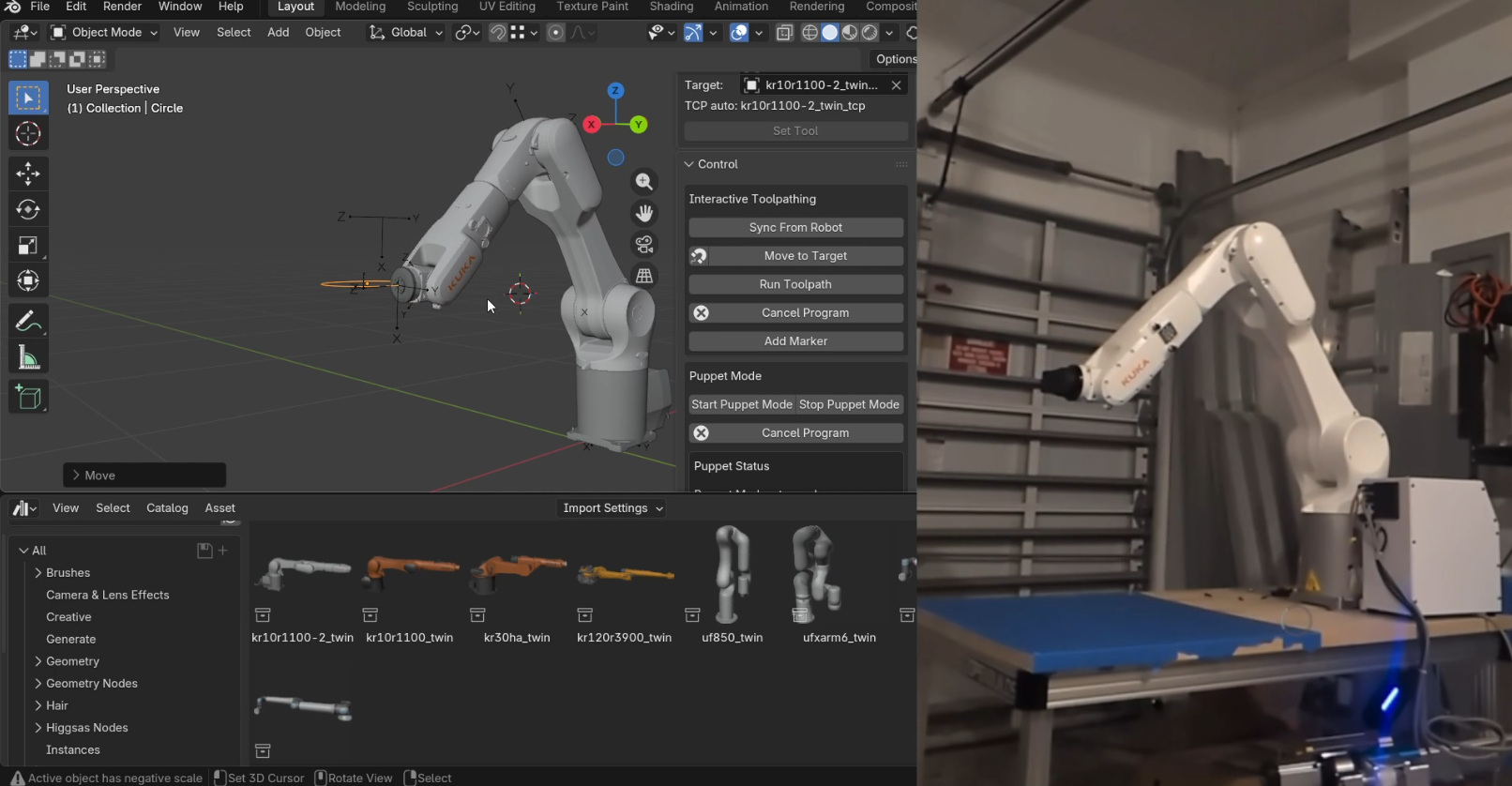
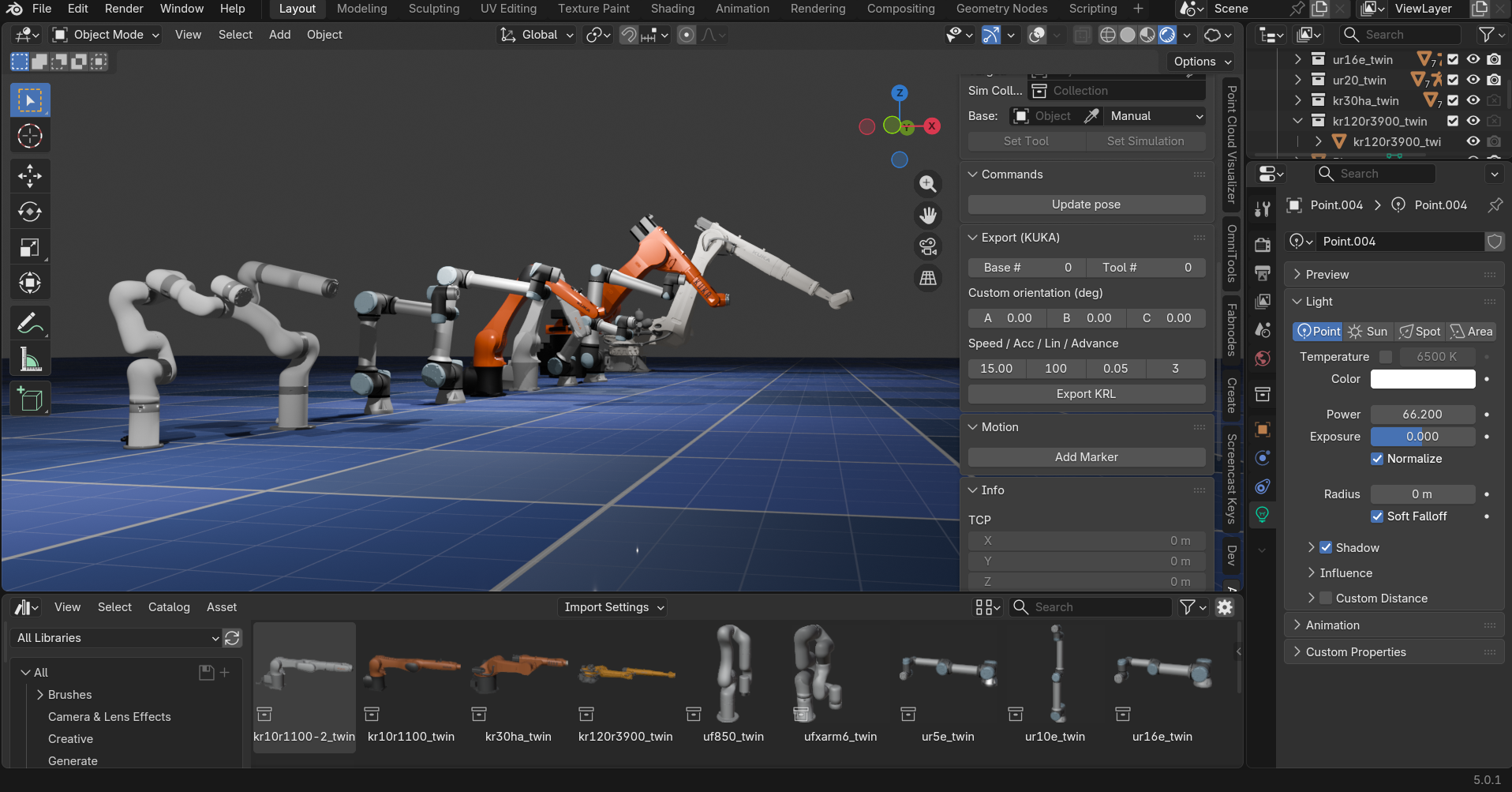
Luis Arturo Pacheco is an Assistant Professor of Architecture at Florida Atlantic University and Director of the Interactive Machines Lab. His research focuses on computational design, robotics, digital fabrication, and intuitive interfaces for creative robotic control. He is the creator of Animaquina, an open-source Blender add-on that enables artists and designers to animate and control industrial robots using familiar digital animation workflows.
By donating to MAD Arts, you're not just supporting our mission; you're investing in the future of art and technology, fostering a cultural legacy, and uplifting the South Florida community. Help us continue to provide a space where creativity thrives and new ideas come to life.
Donate Today


